By late September, the parking spaces closest to the first tee at Montreux start opening up. Tee sheets that were booked solid through August have gaps in them by mid-morning. If you judge the community by that lot alone, you'd guess the whole place is winding down for the year.
It isn't. The activity doesn't disappear when the course empties out. It moves about a hundred yards, from the fairways to the dining rooms, and for a specific reason that has nothing to do with the weather.
Every Montreux membership, whether it's a full Golf Membership, an Equity Golf Membership, an Executive Golf Membership, or a Clubhouse-only membership, carries the same built-in requirement: a $1,200 annual food and beverage minimum. That number doesn't know or care whether anyone played eighteen holes that week. It's tied to the calendar year, not the golf season. So as the course at roughly 5,500 feet in the Galena Forest starts to lose its playable window, the incentive to spend down that minimum doesn't fade with it. If anything, it gets more urgent.
The Empty Lot Doesn't Mean an Empty Calendar
Montreux's Jack Nicklaus Signature course, the only one of its kind in northern Nevada, sits high enough in the Sierra foothills that it doesn't play the same twelve months a valley course would. One longtime reviewer pegged the realistic playing window at around five months, roughly May through September, before elevation and overnight temperatures start working against tee times. That's not an official club policy, it's a golfer's read on the calendar, but it lines up with what residents already notice: by the time the aspens along Galena Creek start turning, the course is doing less of the talking.
What fills that space is the club's social calendar, and it's worth being specific about what that actually looks like, because "clubhouse dining" undersells it.
What $1,200 a Year Is Actually For
The membership structure at Montreux breaks into a few tiers, and the dues vary, but the food and beverage minimum doesn't. Based on the club's most recently published rate sheet, the breakdown looked like this:
- Golf Membership: $60,000 contribution plus a $50,000 non-refundable capital fee, with monthly dues around $1,345 operating and $350 capital
- Equity Golf Membership: similar contribution structure, monthly dues around $950 operating and $280 capital
- Executive Golf Membership: monthly dues around $765 operating and $230 capital, with the option to defer capital fees until age 50
- Clubhouse Membership: dining and social access without the golf privileges attached to the other tiers
Every one of those carries the same $1,200 annual minimum for food and beverage spend. It's a small number relative to the dues, but it's the one piece of the membership that behaves differently once the course closes for the season. Golf access goes dormant for a few months. The dining obligation doesn't.
Two Rooms, One Kitchen
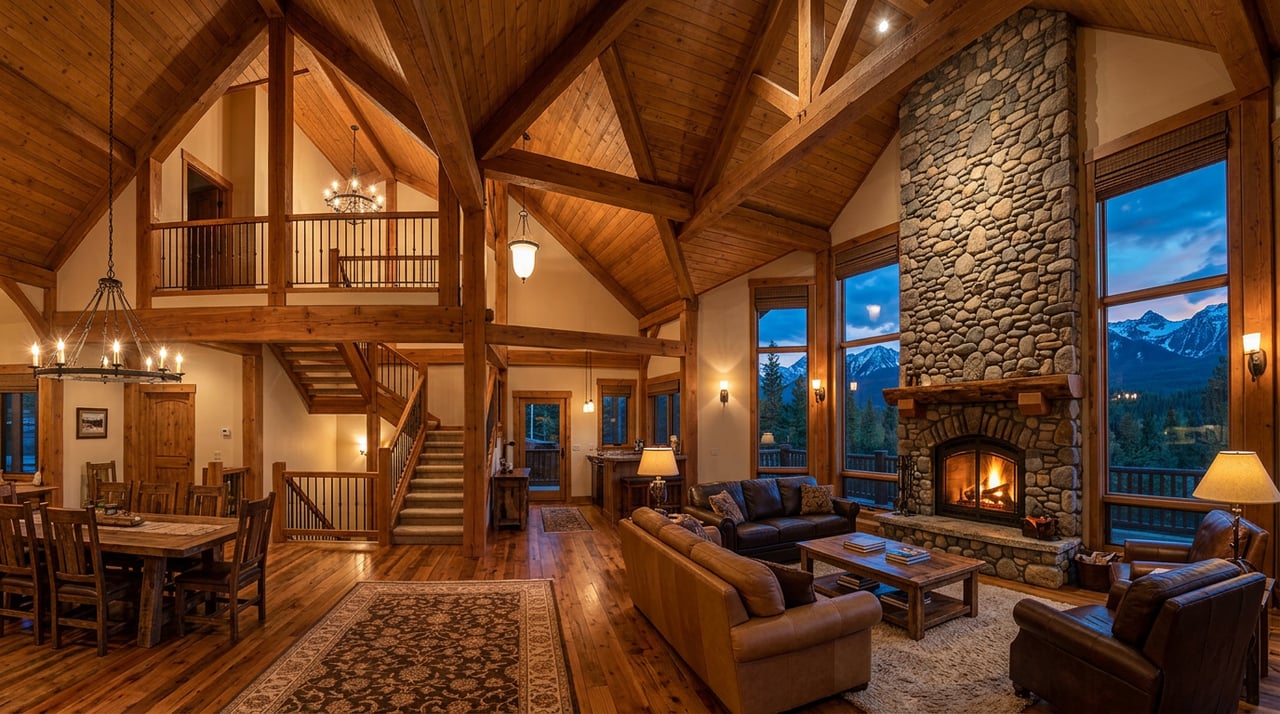
Montreux's clubhouse runs somewhere around 33,000 to 34,000 square feet, built in a French Country Manor style, and it's set up with more than one way to eat a meal on property. There's formal clubhouse dining for the nights that call for it, and there's The Grill at Jack's Den for the nights that don't. Members also get a full calendar of social events and themed dinners running throughout the year, which is the part that tends to get busier, not quieter, once golf stops being the default reason to show up.
This is the piece that a course review or a real estate listing won't tell you, because it's not really about the golf course at all. It's about a membership fee structure that quietly redirects foot traffic toward the kitchen the moment the fairways get less interesting. Residents who track their own household's F&B spend tend to notice the pattern by their second or third fall in the community: the themed dinners in October and November aren't filler, they're where a chunk of that annual minimum actually gets used.
The Simulator Bay Gets Its Turn
Golf itself doesn't fully stop, either. It relocates indoors. Montreux's practice facilities include an HD Golf range with swing analysis tech that tracks spin rate, club path, face angle, and ball speed, along with simulator access to roughly 28 golf courses, including Pebble Beach, Bethpage Black, and St. Andrews. The club's own guidance to members is to call the golf shop ahead for a simulator tee time in the 23rd Hole "especially in the busy winter months," which is a small detail but a telling one. Winter simulator bookings at Montreux apparently need advance planning the same way summer tee times do.
Junior golf, which starts at age 6, is described as running through the club's golf season specifically, which means the calendar for younger members shifts too, from actual holes to the range and simulator bays once outdoor play tapers off.
Down Mount Rose Highway, the Errand List Doesn't Change
None of this happens in isolation from the rest of the neighborhood. Montreux sits just off Mount Rose Highway, and the everyday loop residents already run doesn't pause for the season either. Raley's O-N-E Market handles the grocery run. Sunrise Café and Mofo's pizza & pasta cover the nights nobody feels like cooking or driving all the way to the clubhouse. The Shayden Summit shopping center picks up everything else. None of that changes when the golf course goes dormant. If anything, those spots see a little more traffic from residents who'd otherwise have spent a fall evening on the back nine.
The Trap That Made Montreux Famous Is Still There Next Spring
It's easy to forget, standing in an empty clubhouse parking lot in November, that this same course hosted a PGA Tour event for two decades. Montreux was home to the Reno-Tahoe Open starting in 1999, later renamed the Barracuda Championship, through 2019. The signature stretch, holes 6 through 8, still carries the nickname the Bear Trap, and the par-4 17th still drops 138 feet from tee to fairway, same as it did when tour players were walking it every August. None of that goes anywhere over the winter. It's just waiting, the same way the course itself is, for the next five-month window to open back up.
For now, the story at Montreux isn't the quiet fairways. It's the dining rooms and the simulator bay picking up the slack, the food and beverage minimum quietly doing its job, and a neighborhood that doesn't actually go quiet just because the greens do.
If you're curious what else shapes daily life inside the gates at Montreux, or you're weighing a move into the community, the team at Michael Herman NV knows this neighborhood's rhythms firsthand. Reach out to request a private Montreux consultation.